Hybrid Team Collaboration: Best Practices for Modern Teams

Introduction: Why Hybrid Team Collaboration Is the New Normal
Hybrid work is no longer an experiment, it’s a permanent shift in how modern teams operate. Some employees work from offices, others from home or different cities, and many switch between both. At the center of this model lies hybrid team collaboration: the ability for distributed and co-located team members to work together smoothly, productively, and with a shared sense of purpose. On paper, hybrid work sounds ideal. Teams gain flexibility, companies access wider talent pools, and employees enjoy better work-life balance. In reality, collaboration across locations can feel messy. Communication gaps creep in. Visibility into projects drops. Some team members feel more “seen” than others. And without intention, the hybrid model can quietly create silos and frustration. The good news? Hybrid collaboration doesn’t fail because people aren’t trying, it fails because systems, expectations, and tools aren’t designed for it. With the right strategies and technology, hybrid teams can actually collaborate better than fully in-office ones. This guide breaks down the biggest challenges of hybrid team collaboration and shows practical, human-friendly ways to solve them.
Understanding Hybrid Team Collaboration
Hybrid team collaboration refers to how individuals working across a mix of remote and on-site environments communicate, coordinate tasks, and achieve shared goals. Unlike fully remote or fully office-based teams, hybrid teams face a unique balancing act: ensuring equal participation, clarity, and trust regardless of location.
What Makes Hybrid Collaboration Different?
- Team members don’t share the same physical context.
- Information can easily favor those “in the office”.
- Communication requires more structure and documentation.
- Trust is built more on outcomes than observation.
When done right, hybrid collaboration promotes autonomy, accountability, and focus. When done poorly, it leads to misalignment, burnout, and disengagement.
Core Challenges of Hybrid Team Collaboration
1. Inconsistent Communication
Hybrid teams often struggle with fragmented communication. Office conversations happen informally, while remote team members rely on messages and scheduled calls. This creates information gaps and misunderstandings. Common symptoms include:
- Important decisions discussed offline.
- Remote employees feeling out of the loop.
- Repeating the same context multiple times.
Without shared communication norms, collaboration quickly breaks down.
2. Lack of Project and Work Visibility
When managers can’t easily see progress, and team members don’t know who’s working on what, confusion follows. Hybrid collaboration suffers if visibility depends on physical presence instead of shared systems. This shows up as:
- Duplicate work.
- Missed deadlines.
- Uneven workload distribution.
Visibility isn’t about micromanaging, it’s about clarity.
3. Difficulty Building Trust and Team Cohesion
Trust is often built through everyday interactions: quick chats, shared lunches, or hallway check-ins. Hybrid teams don’t get these naturally, which makes relationship-building more intentional, and sometimes neglected. Over time, this can lead to:
- Weaker team bonds.
- Reduced psychological safety.
- “Us vs. them” dynamics between remote and in-office staff.
4. Meeting Overload and Zoom Fatigue
Ironically, trying to fix collaboration issues often leads to more meetings. Hybrid teams schedule calls to stay aligned, but excessive or poorly structured meetings drain energy and reduce productivity. Signs of this problem:
- Long, repetitive meetings.
- Too many attendees.
- Little action after calls end.
Best Practices to Improve Hybrid Team Collaboration
Set Clear Communication Protocols
Hybrid teams thrive on clarity. Define how, where, and when communication should happen. For example:
- Use chat tools for quick updates.
- Use project boards for task-related discussions.
- Reserve meetings for decisions and collaboration, not status updates.
Documenting these norms helps everyone stay aligned, regardless of location.
Focus on Outcomes, Not Hours
One of the biggest mindset shifts in hybrid team collaboration is measuring work by results, not presence. This builds trust and empowers employees to work flexibly without pressure. Outcome-based collaboration:
- Encourages ownership.
- Reduces burnout.
- Creates fairness across locations.
Clear goals and expectations matter more than who logs in first or stays late.
Create Inclusive Meeting Practices
Hybrid meetings can unintentionally prioritize people in the room. Inclusive collaboration requires leveling the field. Best practices include:
- Everyone joins meetings via the same platform.
- Meetings have clear agendas and notes.
- Remote participants are actively invited to contribute.
Small changes make a big difference in engagement.
Invest in Documentation and Knowledge Sharing
In hybrid teams, written knowledge becomes the backbone of collaboration. Decisions, processes, and updates should live in shared spaces, not personal inboxes or office conversations. Strong documentation:
- Reduces dependence on real-time responses.
- Helps new team members onboard faster.
- Prevents information loss.
The Role of Technology in Hybrid Team Collaboration
Technology isn’t just support, it’s the infrastructure that holds hybrid collaboration together. Without the right tools, even the best intentions fall apart.
Choosing the Right Team Collaboration Tool
A modern Team Collaboration Tool helps centralize communication, tasks, and teamwork across locations. Instead of juggling scattered apps, teams can align work in a single, shared workspace. An effective collaboration tool should support:
- Real-time and async communication.
- Task and project tracking.
- Clear ownership and accountability.
- Seamless collaboration between remote and office teams.
The goal isn’t more tools, it’s fewer, smarter ones that reduce friction.
Why Time Transparency Matters
Time tracking often gets a bad reputation, but when implemented thoughtfully, it can improve trust rather than hurt it. An Accurate Time Tracking Tool provides insight into how work actually happens without constant check-ins or guesswork. In hybrid teams, accurate time data helps with:
- Understanding workloads and capacity.
- Preventing burnout.
- Improving project planning.
- Ensuring fair distribution of work.
When framed as a productivity and planning aid instead of surveillance, time tracking becomes a powerful collaboration ally.
Technology as an Enabler of Trust
The right tools reduce uncertainty. They answer questions teams shouldn’t have to ask repeatedly, such as:
- What’s my priority today?
- Who owns this task?
- How far along is the project?
By giving everyone access to the same information, technology strengthens transparency, fairness, and confidence across the team.
Building a Strong Hybrid Collaboration Culture
Tools and processes matter but culture makes them work.
Encourage Autonomy and Accountability
Hybrid teams perform best when people feel trusted. Encourage autonomy by giving teams control over how they achieve goals, while maintaining accountability through clear outcomes.
Regularly Check In, Not Check Up
Instead of monitoring activity, managers should focus on meaningful check-ins:
- Are blockers slowing you down?
- Do you have what you need to succeed?
- What can we improve together?
This reinforces collaboration as a shared effort.
Celebrate Wins Across Locations
Recognition shouldn’t favor visibility. Celebrate achievements publicly and consistently, whether the work happened at a desk or from a home office. Shared wins strengthen team identity.
Looking Ahead: Making Hybrid Team Collaboration Sustainable
Hybrid work isn’t a temporary trend, it’s a long-term operating model. That means hybrid team collaboration must be intentional, structured, and continuously improved. Success comes from:
- Clear communication norms.
- Outcome-driven expectations.
- Inclusive practices.
- Purposeful use of technology.
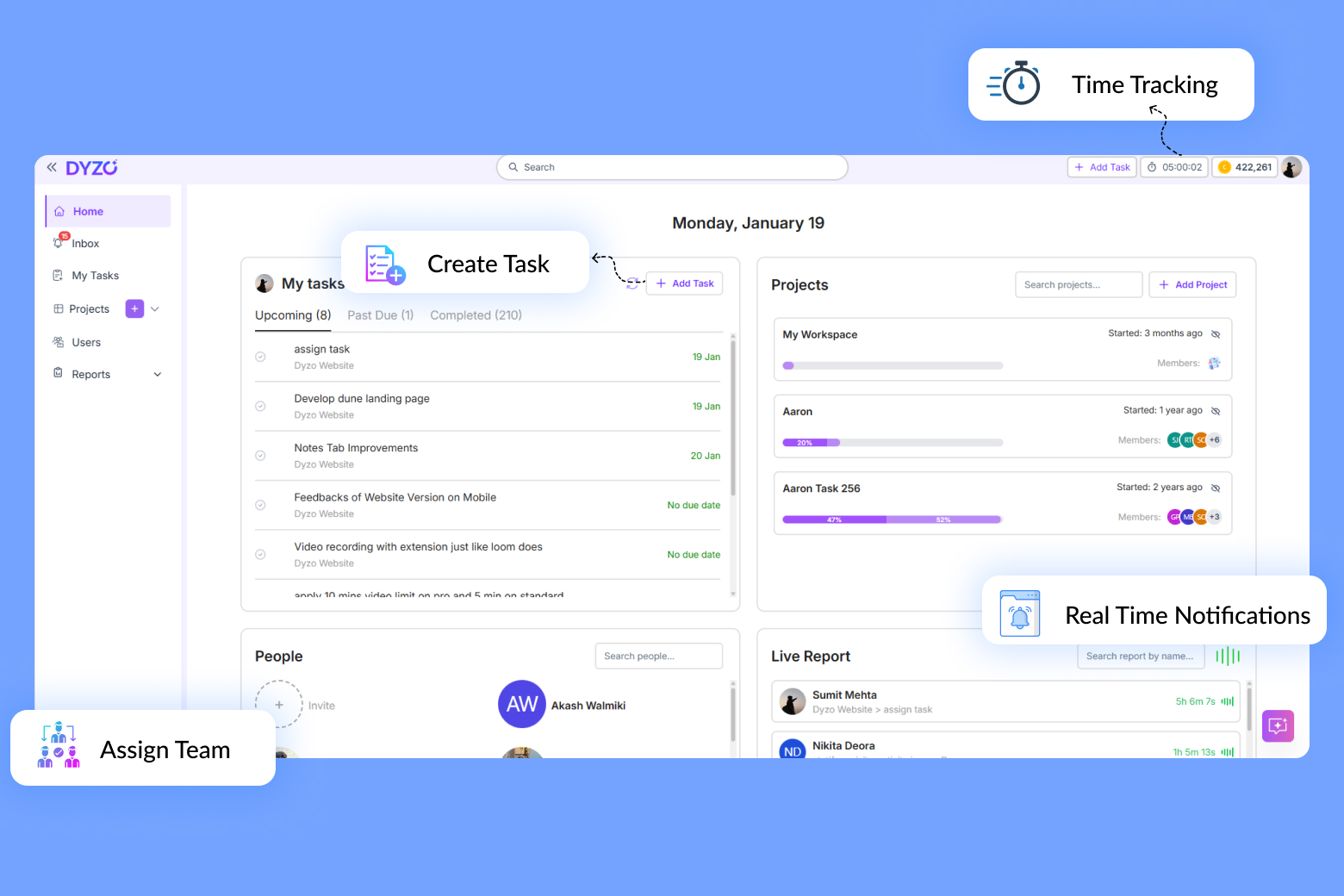
Platforms like Dyzo.ai are built with this reality in mind bringing together collaboration, visibility, and productivity into a unified workspace that supports how modern teams actually work.
Conclusion: Collaboration by Design, Not by Chance
Hybrid team collaboration doesn’t happen automatically. It requires clear strategy, human-centered leadership, and technology that supports trust instead of control. When teams align around outcomes, communicate transparently, and use the right tools, hybrid work stops feeling fragmented, and starts feeling flexible, focused, and fair. The future of work is hybrid. The teams that win will be the ones that collaborate intentionally, not accidentally.
Ready to try Dyzo for free?
Plan work, track time, and automate busywork — all in one place.
Start Free with Dyzo →No credit card required · Free forever plan · 2-minute setup
Part of these guides: